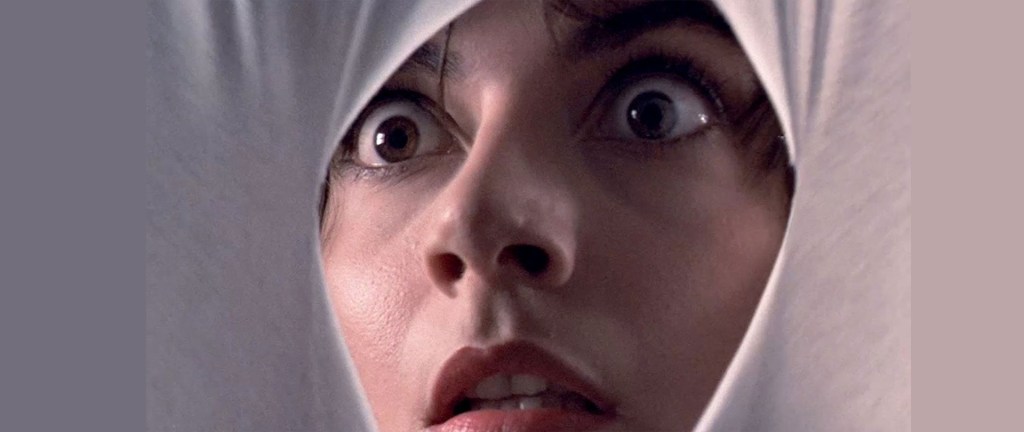
I remember the first time I ever saw an italian horror movie. I was rummaging around at the local DVD store around the age of 14 when I saw this movie with the most insane poster I had ever seen. I bought it right away and watched it the very same night and i was blown away, the movie was Mario Bavas Blood and Black Lace. It was like the slasher films I had seen before, but with an artistic twist. For a second it felt like I had discovered a secret cave that only I knew about, but little did I know that these movies were the reason that one of my favorite sub-genres exist in the first place. The italians had apparently, without me knowing about it, perfected their own splatter genre with the giallo and zombie films, the two best examples of the italian splatter scene.
Part 1: The Giallo

I have written about some of the impact of the American «slasher» film or what could also be called a splatterfilm, but you can not have a conversation about slasher films without talking about the country that basically invented the genre. Depending on what you consider the first true slasher film is a conversation to be had, but i belive that italy made the earliest example of what we now know as the slasher film today. These movies became so known that it got its own sub-genre by the name Giallo Which translates to the word thriller in italian. Some of the most well-known directors within the genre is people such as Mario Bava, Dario Argento and Lucio Fulci.
One of the earliest examples of the italian slasher is the film Blood and Black Lace. The movie follows a group of dancers who are stalked and killed by a masked assailant. what defined a lot of these early films is ironically the beauty. beautiful people, beautiful scenery and most notably the beautiful cinematography. The movies also usually follows an amature detective who is usually just an every-day man who is dropped into this mystery. Like American slasher films, the police is of no help, but in the italian films it is usually because of incompetance instead of the characters being isolated from any sort of help. The iconogrofy is something that also cant be ignored in these films, the killer is often portrayed as a person in a trenchcoat and a hat to hide their identity. The killers also have some kind of small knife like a switchblade or a razor to kill their victims along with a pair of tight, black leather gloves.
It’s impossible to talk about this genre without mentioning one of the most well known, and perhaps the best movie within the genre. Deep Red is Dario Argento’s masterpiece. It has all the elements talked about above, and does it flawlessly. After a jazz pianist witnesses the murder of a psychic that has seen a murder in her visions, he becomes obsessed with solving the case but as he does, more people are being killed in grousome ways.


In my previous text i talked about how Friday the 13th broke gendertropes by having a woman as the killer, but in italian Giallo films this was way more common. In the film Blood and Black Lace the killer is revealed to be a girl who has been convinced to kill her colleages. In the same movies that break these gender roles, they also have way more nudity than their American counterparts.
In terms of narrative and technical approaches to these films, giallo films are more artistic than american slasher films. I also would like to mention that one of the best jumpscares in cinema history happens in Dario Argentos masterpiece, Deep Red. As a man is convinced a person is in his house and behind a door, he tries franticly to call the police and as the camera focuses on the door, the funky music suddenly stops and the door suddenly bursts open and a little life-size animatronic dool runs towards him while an automatic childs laughter goes off in the background.

When i first watched this movie, this scene scared me so badly I was in shock. I had never been that scared of a slasher film before and it was at that point i realized that the genre had huge potential beyond the way it had been categorized in academia. I hate to compare the genres because in many ways they are very different, but the giallo films birthed the modern slasher film, so i think it is fair to compare.
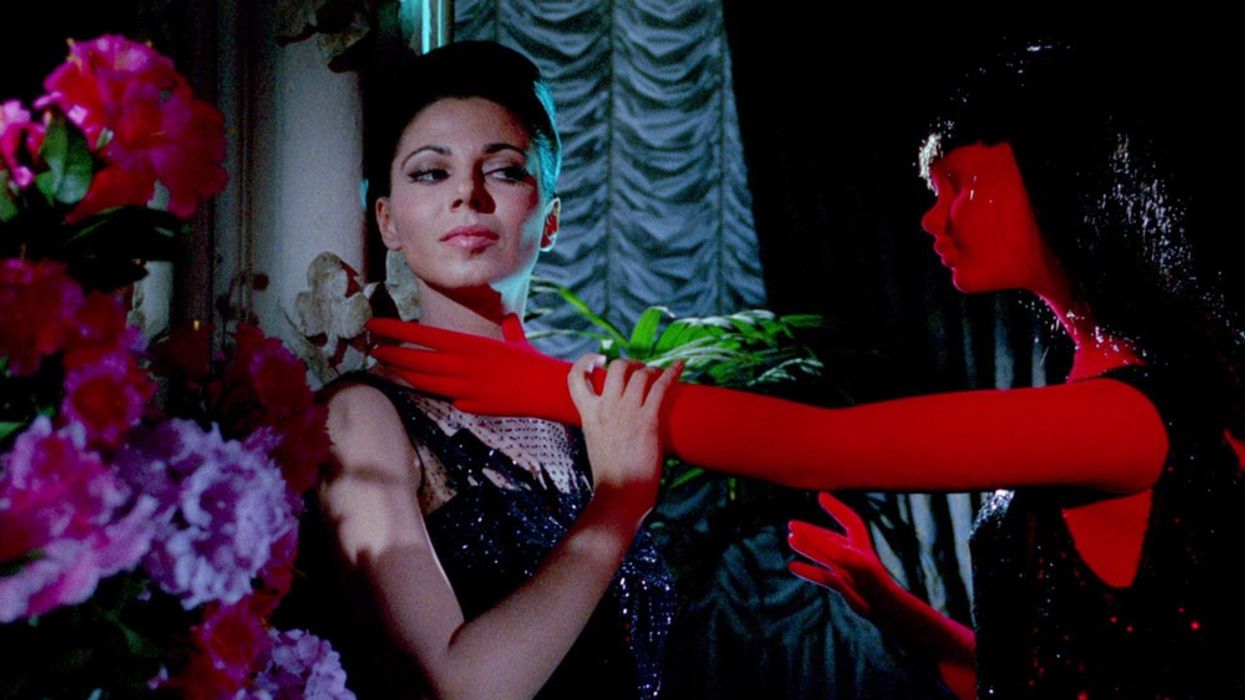
The mix of beautiful cinematography and the most gruesome deaths put to screen, gives the italian giallo a very unique style. The blood is more red and gory than ever and the color use in these films is one of the most recognizable elements of the giallo genre.
Part 2: The zombie genre

As I have argued, the giallo film was the most important referance point for the slasher film of the 80s. The same can also be said for the zombie genre. It should be said that italy didnt originate the genre, but in my opinion made it its own. some of the directors we have mentioned are within this genre too, most notably Lucio Fulci. He has made movies such as Zombie, City of the living dead and The Beyond.
What separates the italian zombie movie for me is the forboring sense of dread these movies instill in the audience. American zombie movies are often focused on the aftermath of a zombie apocalypse and how people survive within such a world. The italian zombie film is much more dreadful. Whereas the american movies have a sense of hope and survival in them, the italians dont hold back on the bleakness and darkness of such an event. They usually focus on the start of such an epidemic rather than the aftermath where people have adapted in some way. The endings are usually bleak and make the characters efforts in the film futile in the face of the return of the dead.
The undead in the italian zombie movie are usually of the slow kind. Many people have argued that slow zombies aren’t scary because you can simply run away and be safe, but that is not the case in these films. They dont need to be fast because the apocalypse has already arrived, and they now roam the earth with all the time in the world to kill the last humans alive.

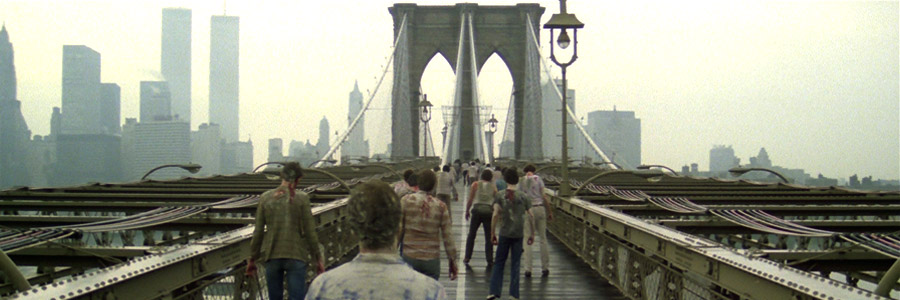
My favorite zombie movie of all time is lucio Fulcis Zombie. Originaly marketed as a sequel to George A. Romeros Night of The Living Dead, as one of its many titles is simply Zombie 2. It is one of the bleakest zombie films put to screen. The movie follows a young girl looking for her father and a nosy reporter, who travel to an island in a sunny paradise to find him – only to discover that the island is being overrun by the undead. The movie ends with the characters getting off the island and sailing towards safety, but as they listen to the radio they realize that the undead have risen all over New York and the end times are upon them. It’s safe to say that the italians see the zombie apocalypse as the true end for humanity. Where american films often portray it as yet another obstacle to overcome and survive, the italians view it as the last trumpets sounding and humanity’s last scream of desperation.
The reason for the dead rising from their graves is never really focused on, because that won’t change what is happening. It could be a virus, it could be dark magic or an act from god, it doesn’t matter because when it happens, we won’t be alive to ponder the why of it all. It is not for us to know, because at the end of the day we are powerless to the unseen and unknown forces of the universe we live in. We are just a blip in existence and when our time comes it won’t be our privilege to know why we dont deserve to live. These movies always focus on the beginning of the apocalypse because none of of will be alive to see it all the way through and that is the scariest part of it all.
This feeling is mastered by the italians when it comes to zombie films and I think that is why they are superior to their american counterpart. A true zombie film isn’t about the undead themselves, but rather what it represents, which is the end times. When the zombies move over the Brooklyn bridge as the credits roll, it is the credits for the entire human race, all the while a funky synth score blasts in the background. It might be the bleakest ending to a movie ever.
Another example of the dread in these movies is from another Fulci classic, The Beyond. The movie follows a woman who has just bought a hotel in New Orleans, but is unaware of the hotel’s dark past and the fact that it is built upon one of the seven gates of hell and as the gates open more and more, the undead rise up. This is one of the cases where we know why the dead are coming back to life, but it doesn’t change the dread we feel.
By the end of the movie the characters find themselves in the basement of the hotel as the undead close in and as they make a run for it they all of a sudden find themselves in a vast, grey landscape. This is hell; there are no demons, no devils and no fire, just a vast grey desert filled with corpses and fog that just goes on and on. As they witness this horror beyond their imagination, their eyes goes white and they just fade away. Once again making our presence in this universe futile in the face of the unknown horrors beyond us. The end of the world isn’t a fiery spectacle, but rather the world turning grey lifeless and us being powerless to stop it. As the final words are uttered by an unknown figure «and you will face the sea of darkness, and all therein that may be explored», they fade away into nothing, representing how we as humans will just fade away without a fight, because what can we do in the face of darkness?

The best examples of American zombie films are George A. Romeros The Living Dead-trilogy which consists of Night of the living dead, Dawn of the dead and Day of the dead. The movies follow the beginning, middle and end of a zombie apocalypse, and follows a new group of survivours in each installment. What these movies have that the italian ones don’t is a glimmer of hope – that the world might be over but we might make it out ok. The notion that the zombie apocalypse is just another world to get used to, and with the right precautions you can survive. These movies makes the apocalypse more adventure-like than anything else. I love these movies – don’t get me wrong – but they have a vastly different idea of what the end of the world looks like.
Part 3: What is this article even about?
After looking closer at some movies from both these italian sub-genres, I have a pretty comprehensive idea of how the italians approach certain themes. There is a certain hopelessness and darkness to these films, but in the background it is filled with beauty. Whether that be an island paradise filled with the undead or the sprawling italian cities being painted red with blood. The reason for my headline being «a cheap glass of wine» is that these films will always have a more refined reputation than their american counterparts. These movies exist in the same sphere of being low-budget splatter films, but they are films that are worth taking seriously despite being «cheap» wines.
Italian splatter films will always be known to me as the more refined versions of what I know now these movies can be. The giallo shaped the entire slasher genre as we know it, and the zombie genre refined the more bleak and apocalyptic side of the zombie outbreak. In short, the italians took these concepts and grinded them down to their pure, beautiful and gory components and made it their own – drenched in beautiful colors and scenery. Every shot feels like a painting and suddenly it reminds you in the most gory way possible that they are splatter films, and that’s their greatest strengths. Beauty and blood goes hand in hand, and that balance is what makes them what they are.


Legg igjen en kommentar